Monkey House: A Display Font with a Playful Edge
Let's be honest—most fonts are forgettable. They do their job, sitting quietly in the background, but they rarely make you stop and think, "Wow, that's interesting." Monkey House is different. It's a display font that immediately injects personality into any project it touches. If you've been scrolling through endless typeface options looking for something that actually has character, something that feels alive and memorable, you might have just found your match. This isn't just another pretty set of letters; it's a creative tool that can genuinely shift the energy of your designs.
What Makes This Typeface Stand Out
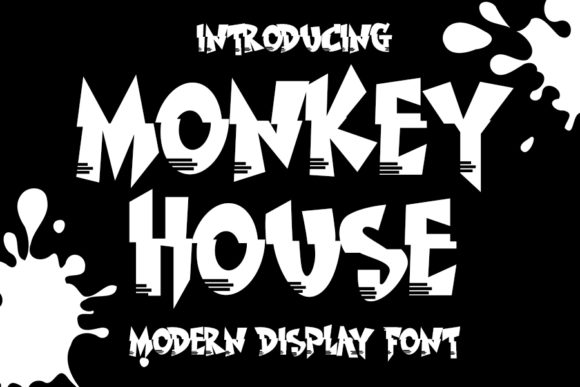
Monkey House carries a bold, slightly whimsical personality without tipping into childish territory. Think of it as the font equivalent of a confident person walking into a room—it doesn't need to shout to get noticed. The letterforms have a distinct rhythm and flow, with curves and angles that feel intentional and crafted. There's a warmth to it that makes it approachable, yet it holds enough structure to feel professional in the right context.
What really sets it apart from other display fonts is its versatility across different moods. Depending on how you use it—size, color, spacing, surrounding elements—it can feel playful, retro, artistic, or even edgy. That kind of range is rare in a single typeface, and it's exactly what makes Monkey House worth exploring for a variety of projects.
Where This Font Truly Shines
Let's talk about real-world applications, because that's where a font either proves its worth or falls flat. Monkey House works beautifully in scenarios where you need to make an immediate visual impression. Logo design is an obvious starting point. If you're building a brand that wants to feel approachable yet distinctive—think artisan food brands, boutique studios, indie coffee shops, or creative agencies—this typeface can serve as the foundation of your visual identity. It gives you that instant recognizability that so many brands struggle to achieve with overused, generic fonts.
Packaging design is another area where Monkey House excels. Imagine it on a craft beer label, a handmade candle box, or a specialty snack wrapper. The font's personality helps products stand out on crowded shelves and communicates a sense of care and creativity before the customer even reads the product details. It tells a story through its visual presence alone.
Social media graphics are where many creators and marketers feel the constant pressure to grab attention in a split second. Monkey House handles that challenge well. Whether you're designing Instagram story templates, quote graphics, announcement posts, or promotional banners, the font's distinctive look helps your content stop the scroll. It pairs especially well with clean sans serif fonts for body text, creating a hierarchy that's both readable and visually engaging.
For anyone working on editorial design—think magazine layouts, blog headers, or digital publications—Monkey House can add a layer of sophistication and interest to headlines and pull quotes. It draws the reader's eye exactly where you want it, which is half the battle in editorial work. Posters and event invitations also benefit from its bold presence. Birthday parties, gallery openings, product launches, community events—any situation where you want the typography itself to convey excitement and character.
Merchandise is yet another playground for this font. T-shirts, tote bags, stickers, mugs—Monkey House has the kind of visual punch that translates well to physical products. Its clean enough to reproduce clearly at various sizes, yet distinctive enough to feel like genuine design rather than clip art.
Pairing Monkey House with Other Fonts
One of the most practical things you can do with any display font is learn how to pair it effectively. Monkey House works best when it's given room to breathe as the headline or focal point typeface. For body copy, consider pairing it with a clean sans serif font like a modern grotesque or a humanist sans. The contrast between Monkey House's expressive personality and the neutrality of a well-chosen body font creates a balanced, professional look.
If your project leans more editorial or traditional, you could also experiment with pairing it alongside a classic serif font. The combination of a bold, characterful display font with an elegant serif for supporting text can feel both contemporary and timeless. The key is to let Monkey House do the heavy lifting visually while your secondary font handles readability in longer passages.
Always test your pairings at the actual sizes they'll appear in your final design. A combination that looks great at 72 points on your screen might feel completely different at 14 points in a printed brochure. Print a test sheet if you're working on physical materials, or preview at actual size on multiple devices for digital projects.
Practical Tips for Getting the Most Out of It
Before you commit Monkey House to a major project, spend some time exploring the included styles and weights. Many premium fonts come with alternates, ligatures, or stylistic variations that can add even more personality to your work. Understanding what's available in the font package helps you make informed decisions and unlocks creative possibilities you might otherwise miss.
Spacing and kerning deserve attention too. Display fonts often need manual adjustments depending on the specific letter combinations in your text. A few minutes of tweaking letter spacing can be the difference between a design that feels polished and one that feels off. Don't rely entirely on default settings—especially for logos and headlines where every detail is magnified.
Readability should always be a priority, even with a bold display font. Monkey House is designed to be eye-catching, but that doesn't mean it works at every size or in every context. Use it for short, impactful text—headlines, taglines, single words or phrases. For paragraphs, body copy, or any text that needs to be read quickly and easily, switch to a more neutral typeface. Knowing when not to use your display font is just as important as knowing when to use it.
Color and background matter more than people realize. Monkey House's personality shifts depending on whether it's set in black on white, white on a dark background, or a bold color against a textured surface. Experiment with different combinations to find the mood that best fits your project. A font that feels playful in bright yellow might feel sophisticated in deep navy.
Licensing and Commercial Use
If you're planning to use Monkey House for commercial work—which includes client projects, products for sale, business branding, or monetized content—make sure you understand the licensing terms. Most premium fonts include a commercial license, but the specifics vary. Some licenses cover a certain number of users or projects, while others are more flexible. Taking five minutes to read the license agreement protects you legally and ensures you're using the font appropriately. It's a small step that many creators skip, and it can save headaches down the road.
For small businesses and freelancers, investing in a quality commercial font like Monkey House is often more cost-effective than you'd think. Compared to the hourly rate of a custom lettering artist or the time spent trying to make a free font look professional, a well-designed typeface pays for itself quickly. It becomes a reusable design asset that strengthens your brand every time you use it.
Bringing It All Together
Typography is one of those elements that quietly shapes how people perceive your work. A thoughtfully chosen font communicates professionalism, personality, and intention—sometimes before a single word is actually read. Monkey House gives you a tool that's expressive without being overwhelming, distinctive without being impractical. Whether you're refreshing a brand identity, designing a product line, building a social media presence, or creating something entirely personal, it's the kind of font that makes people pause and pay attention. And in a world overflowing with visual noise, that's no small thing.