Outline: A Quirky Display Font for Playful Branding
There's something undeniably charming about a font that doesn't take itself too seriously. It whispers rather than shouts, invites curiosity instead of demanding attention, and brings a sense of warmth to any project it touches. That's exactly the energy that Outline brings to the table—a display typeface that balances personality with versatility in a way that feels refreshingly human. Whether you're sketching out a new logo for your small business or designing a series of social media posts for your handmade candle brand, this font has a way of making everything feel a little more approachable and a lot more fun.
What Makes Outline Stand Out in a Crowded Font Market
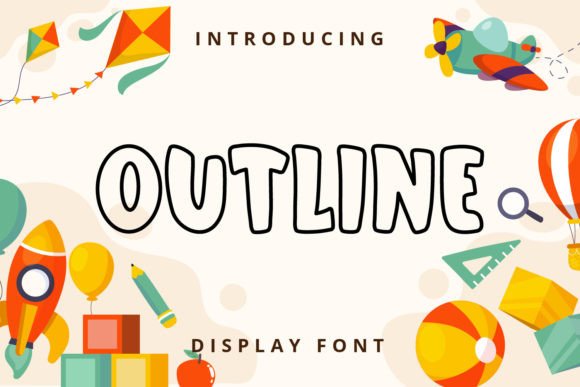
At first glance, Outline feels familiar yet distinctive. It carries the hallmarks of a classic display font—clear letterforms, balanced proportions, and enough visual weight to anchor a design—but with a playful twist that sets it apart from more conventional choices. The slightly quirky curves and unexpected details give it character without sacrificing legibility. You won't find yourself squinting to read a headline or wondering whether that letter is an "a" or an "o." Instead, you get a typeface that's expressive and functional at the same time.
This is the kind of font that works beautifully when you want your design to feel approachable. Think of a children's book cover, a bakery's packaging, or a lifestyle blog header. Outline steps into those spaces naturally, adding personality without overwhelming the visual hierarchy. It's not trying to be edgy or avant-garde—it's simply being itself, and that authenticity translates into designs that connect with real people.
Where Outline Truly Shines: Real-World Applications
One of the biggest strengths of a well-crafted display font is its range. Outline isn't a one-trick pony. It adapts to different contexts with surprising ease, which makes it a practical addition to any designer's toolkit. Here are some of the ways you can put it to work:
- Logo design: If your brand identity leans friendly, creative, or approachable, Outline can serve as the foundation of a memorable logo. Its distinctive letterforms help your mark stand out without relying on overly complex graphic elements.
- Packaging: For artisan products, food brands, or craft businesses, the font adds a handmade quality that feels genuine. Imagine it on a jam jar label or a soap wrapper—it immediately sets the right tone.
- Social media graphics: Instagram quotes, Pinterest pins, and Facebook banners all benefit from a typeface that's easy to read at various sizes. Outline holds up well across platforms, whether you're designing for mobile screens or desktop feeds.
- Invitations and event materials: Birthday parties, baby showers, and community events call for a font that feels celebratory without being overly formal. Outline strikes that balance perfectly.
- Merchandise and print products: Tote bags, mugs, stickers, and greeting cards all become more appealing when the typography has personality. This font works well for merchandise because it translates cleanly across different printing methods.
- Blog headers and editorial layouts: If you're a content creator looking to give your website a cohesive visual identity, using Outline for headings and pull quotes can tie your design together while keeping things visually interesting.
The versatility extends to digital products as well. If you sell planners, worksheets, or printable art, incorporating a font like Outline into your designs can elevate the perceived value and help your products stand out in a competitive marketplace.
Pairing Outline with Other Fonts for Maximum Impact
No font exists in isolation. The real magic happens when you start combining typefaces, and Outline plays well with others. Because it's a display font with a distinct personality, it benefits from being paired with something more understated for body text. A clean sans serif font works beautifully for paragraphs, product descriptions, or any longer-form content where readability is the priority. Think of Outline as the headline act and a neutral sans serif as the supporting player—they complement each other without competing for attention.
If your brand leans more editorial or sophisticated, consider pairing Outline with a classic serif font for a look that feels curated and intentional. The contrast between Outline's playful energy and the timeless structure of a serif typeface creates visual interest that draws the eye. Experiment with different combinations during your design process. Print out a few samples, look at them on screen at different sizes, and see which pairing feels right for your specific project.
Readability and Practical Considerations
While Outline excels as a display font, it's worth thinking carefully about where and how you use it. Display typefaces are designed for larger sizes—headlines, titles, logos, and featured text. They're not meant for long paragraphs or small body copy, and Outline is no exception. Using it at 12-point size in a dense block of text would undermine its strengths and frustrate your readers.
Instead, reserve it for moments where you want to make an impact. A hero section on your website, a bold statement on a poster, or the title of a product label—these are the situations where Outline truly comes alive. At larger sizes, the subtle quirks in its letterforms become features rather than distractions, and the overall effect is one of confident creativity.
It's also smart to test your designs across different devices and formats before finalizing anything. A font that looks fantastic on your desktop monitor might feel different on a smartphone screen or when printed on textured paper. Take the time to preview your work in context. This small step can save you from headaches down the road and ensure that your final product looks exactly the way you envisioned.
Licensing and Getting Started
Before using any font in a commercial project, it's important to understand the licensing terms. Outline is available as a premium font, which typically means you're paying for the right to use it in both personal and commercial contexts. Review the specific license details to make sure your intended use is covered, especially if you're creating products for sale, designing client work, or distributing digital files. Most premium font licenses are straightforward, but it's always worth reading the fine print.
Once you've secured the license, spend some time exploring the font's full character set. Many display fonts include alternate letterforms, ligatures, and stylistic variations that can add even more depth to your designs. Getting familiar with these options before you start a project means you'll be able to make the most of what the font offers.
Typography is one of the most powerful tools in any designer's or business owner's arsenal. The right typeface can shape how people perceive your brand, guide their attention, and create an emotional connection that lasts far beyond a single interaction. Outline brings a warmth and playfulness that's hard to fake with other design elements, making it a worthwhile addition to your creative toolkit. Whether you're building a brand from scratch or refreshing an existing visual identity, it's the kind of font that makes you smile every time you see it in action.