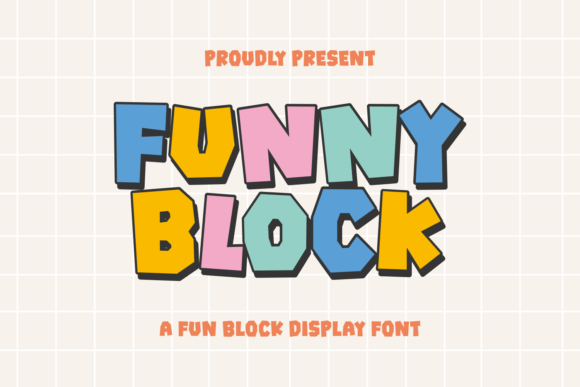
Funny Block: The Blocky Display Font with Big Personality
There’s a particular kind of joy in a font that doesn’t take itself too seriously. Funny Block is exactly that—a blocky, playful display typeface built for designers and creators who want their work to feel energetic, approachable, and unmistakably bold. Its thick, sturdy letterforms are softened by quirky details and rounded edges, giving each character a personality that’s both charming and confident. This isn’t a font for quiet, understated projects. It’s for headlines that demand attention, logos that stick in memory, and posters that make people smile before they even read the words.
Why Playful Typography Matters More Than You Think
We often underestimate how much a font shapes first impressions. A serious, rigid typeface tells one story; a font like Funny Block tells another entirely. It signals fun, creativity, and a willingness to break from convention—qualities that resonate deeply with audiences tired of sterile, corporate visuals. For small business owners, this kind of personality in typography can be a game-changer. Imagine a children’s brand, a craft brewery, a bakery, or a lifestyle blog using Funny Block for their logo. Instantly, the brand feels more human, more relatable, and more memorable.
But playful doesn’t mean unprofessional. Funny Block is carefully crafted with balanced proportions and consistent spacing, ensuring it remains highly readable even at large sizes. Its blocky structure provides a solid foundation, while the subtle whimsical touches—a slightly uneven baseline here, a quirky terminal there—add character without sacrificing clarity. This balance is what separates a well-designed creative font from a novelty gimmick.
Practical Applications: Where Funny Block Truly Shines
Understanding where a font works best is just as important as liking how it looks. Funny Block excels in contexts where impact and personality are key. Think about the projects you’re working on right now. Could they use a little more visual punch?
- Logo Design & Brand Identity: A logo sets the tone for an entire brand. Funny Block’s bold presence makes it ideal for logos that need to stand out in crowded markets—especially for brands targeting families, kids, or anyone who values a lighthearted aesthetic. It pairs surprisingly well with cleaner sans-serif fonts for body text, creating a dynamic contrast.
- Packaging Design: On shelves or in online stores, packaging has seconds to communicate. Funny Block’s thick strokes ensure product names or key messages are instantly legible, even from a distance. It’s perfect for snack foods, toys, beverages, or any product that wants to convey joy and approachability.
- Social Media Graphics & Digital Content: In the fast-scrolling world of social media, you need graphics that stop thumbs. Use Funny Block for Instagram quotes, YouTube thumbnails, TikTok overlays, or Facebook ads. Its playful vibe boosts engagement and makes content feel more shareable.
- Posters, Invitations & Event Materials: Whether it’s a birthday party, a community fair, a product launch, or a workshop, Funny Block brings energy to any event collateral. It’s particularly effective for designs aimed at children or family audiences.
- Websites & Blogs: While display fonts aren’t typically used for body text, Funny Block can make a striking hero header or section title on a website. It instantly communicates the site’s tone and can make a blog about crafts, parenting, or creative hobbies feel more inviting.
- Merchandise & Print-on-Demand: T-shirts, mugs, tote bags, and stickers thrive on bold, graphic text. Funny Block’s sturdy letterforms translate beautifully to physical products, ensuring designs look crisp and eye-catching.
Pairing Funny Block with Other Fonts
No font is an island, especially in professional design. The key to using a display font like Funny Block effectively is pairing it with complementary typefaces. Since Funny Block is bold and personality-driven, it often benefits from a simpler counterpart for longer text.
Try pairing it with a clean, neutral sans-serif font for body copy—think fonts like Open Sans, Lato, or Montserrat. The contrast lets Funny Block headline while the sans-serif handles readability. For a slightly more sophisticated touch, a simple serif font could work for certain editorial layouts, though test carefully to avoid visual clash. Avoid pairing it with other highly decorative or script fonts, as the designs can compete and create visual noise.
Always test your font pairings in context. Mock up a social media post, a website header, or a packaging label before finalizing. Does the text hierarchy feel clear? Can you read the body copy comfortably? Does the overall composition feel balanced? These practical checks are more valuable than any theoretical rule.
Considering Readability and Context
While Funny Block is designed for impact, readability considerations still apply. It’s most effective at larger sizes—think headlines, titles, and short phrases. At very small sizes, the quirky details that give it charm may become hard to discern, so avoid using it for fine print, lengthy paragraphs, or critical legal text.
Color contrast also matters. Because the letterforms are thick and substantial, Funny Block works well with high-contrast color schemes—light text on dark backgrounds or vice versa. Avoid low-contrast combinations that might make the text blend into the background, especially in digital contexts where screen glare can be an issue.
Consider your audience’s expectations. If you’re designing for a professional services firm or a luxury brand, Funny Block might not align with the desired tone. But for creative industries, education, entertainment, food and beverage, or lifestyle brands, it can be a perfect fit. Always ask: does this font’s personality match the message and the audience?
Practical Tips for Using Funny Block in Your Projects
Ready to incorporate Funny Block into your workflow? Here are some actionable tips to get the most out of this creative font:
- Review the Included Styles: Many premium fonts come with multiple weights or styles. Check what’s included with Funny Block—does it have bold, light, or outline versions? These variations can add flexibility to your designs.
- Understand Licensing: If you’re using Funny Block for commercial projects—client work, merchandise, or products for sale—ensure you have the appropriate commercial license. Most reputable font marketplaces clearly outline licensing terms, so review them before finalizing your purchase.
- Test Across Devices and Sizes: Fonts can look different on screen versus in print, and at various sizes. Create test mockups for your primary use cases to ensure consistency and readability.
- Use It Strategically: Don’t overuse a display font. Funny Block is most powerful when used sparingly for key moments of emphasis. Let it shine as a headline or logo font, and support it with simpler typography elsewhere.
- Explore Design Asset Ecosystems: Funny Block might be part of a larger collection or family. See if there are complementary design assets—illustrations, icons, or other fonts—that work well with it to create a cohesive visual language.
In a world saturated with minimal, safe typography, Funny Block is a refreshing reminder that design can be fun. It’s a tool for creators who want to inject personality into their work without sacrificing quality or readability. Whether you’re designing a logo for a new startup, crafting social media content that needs to pop, or creating packaging that tells a story on the shelf, this blocky, playful typeface offers a distinctive voice that’s hard to ignore. The best design choices are those that feel authentic to the project’s goals—and sometimes, that means choosing a font that simply makes people smile.